



Our Archdiocese
The Archdiocese of Hartford comprises the counties of Hartford, Litchfield and New Haven in Connecticut and includes approximately 469,061 Catholics. Three hundred and forty nine priests minister within the Archdiocese, serving 131 parishes as well as other apostolates. The priests are assisted by 214 deacons. There are 36 Catholic schools in the archdiocese with an enrollment of more than 9,093 students.
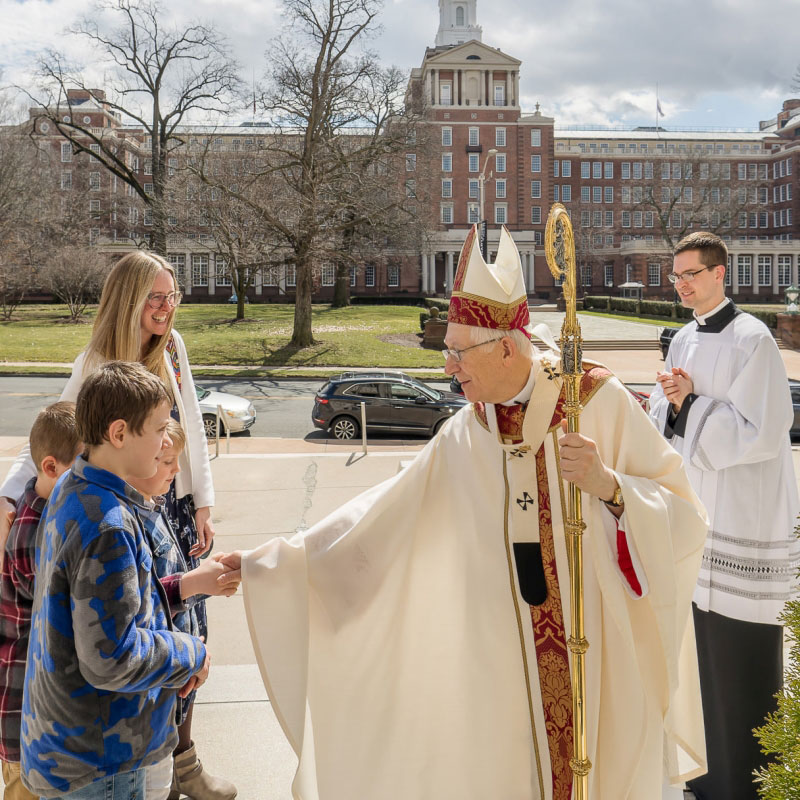
Our Archbishop
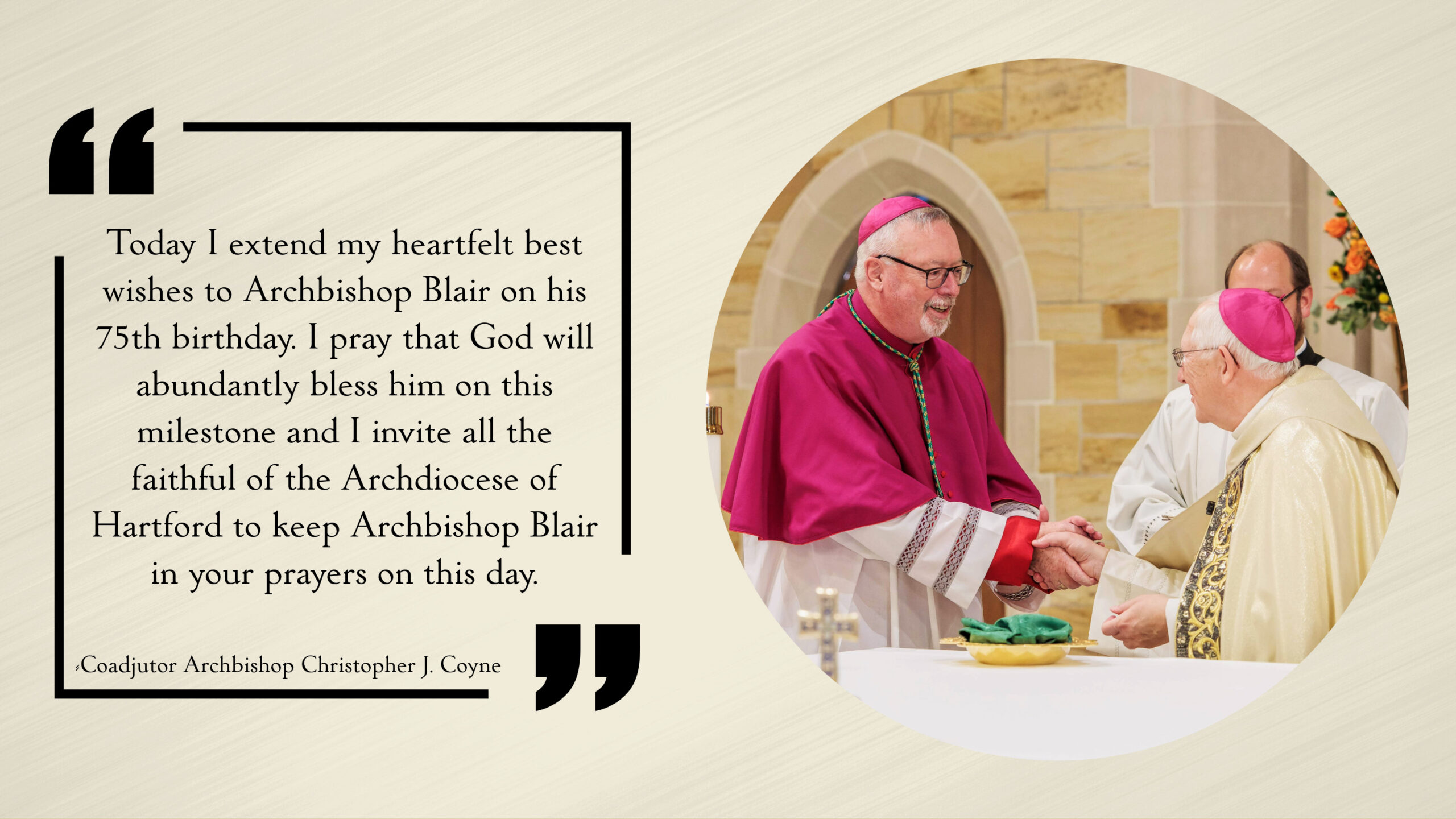
Archbishop Blair was ordained to the priesthood for the Archdiocese of Detroit on June 26, 1976, following studies at Sacred Heart Seminary College, Detroit; the North American College, Rome; and the Pontifical Gregorian University, Rome. Archbishop Blair holds a Bachelor of Arts (B.A.) in History from Sacred Heart Seminary College; a Bachelor of Sacred Theology (S.T.B.) from the Pontifical Gregorian University; a Licentiate in Theology (S.T.L.) with a specialization in Patristics and the History of Theology from the Pontifical Gregorian University; and a Doctorate in Theology (S.T.D.) from the Pontifical University of St. Thomas Aquinas (Angelicum), Rome.
Our Mother Church
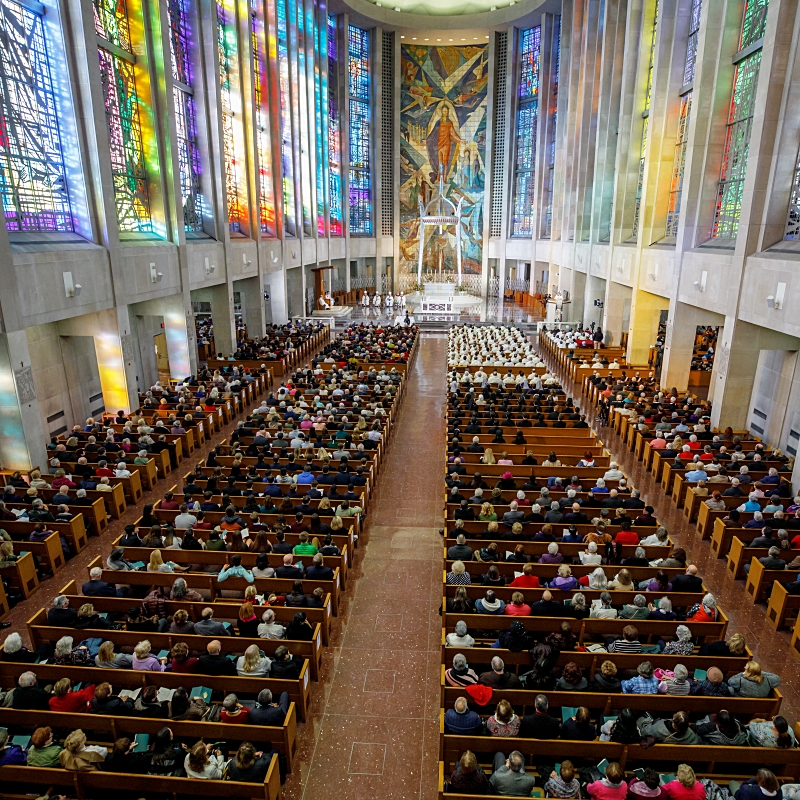
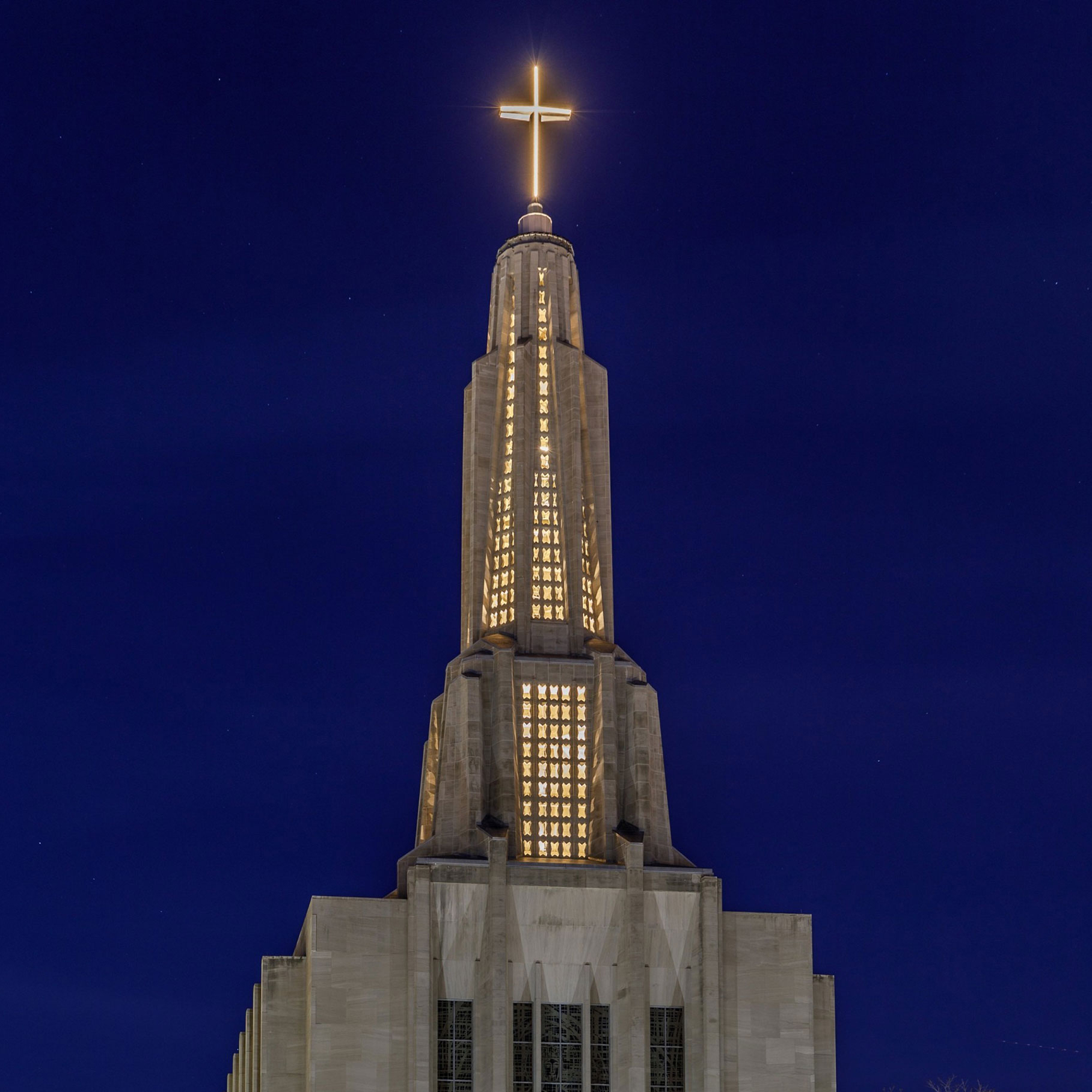
St. Joseph, Patron of the Universal Church, is the patron of the Archdiocese of Hartford. The Cathedral of Saint Joseph rises 281 feet from the sidewalk. The stainless steel cross is 25 feet high. The building is 284 feet long at the extreme end and 156 feet wide from east to west. It is constructed of reinforced concrete, sheathed with Alabama limestone. The grille work in the tower is of the same material and houses 12 carillon bells. The great windows depict the theme of “Christ the Savior” and are 67 feet high and 13 1/2 feet wide. The illumined steeple stands out on the Hartford skyline as a beacon to all to have hope in the Light of Christ.
Something missing in your life?
Looking for “more”? We welcome you! Learn about the beauty and richness of the Catholic faith to help you find what’s missing.
Is God calling you to the priesthood, diaconate or religious life?
Priests
Permanent Deacons
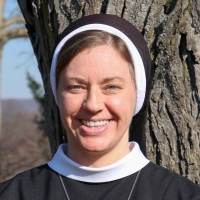
Women Religious